
Quick takeaway: show requirement clarity and measurable process impact, not only documentation tasks.
Quick exercise
Pretend you are reviewing this business analyst resume without knowing the candidate.
What do the opening lines communicate first: documentation activity or business problem-solving value? That first impression often decides whether the profile gets deeper attention.
What Recruiters Look for in a Business Analyst Resume
Recruiters hiring business analysts want proof that you can connect business needs with implementation reality. Your resume should show how you captured requirements, identified gaps, facilitated decisions, and supported delivery without losing business objectives.
The strongest BA resumes show structured thinking with practical impact. Example: “Mapped claims workflow across 6 teams, identified bottlenecks in approval routing, and reduced processing time by 18% after requirements redesign.” That line demonstrates analysis quality and business value.
Stakeholder communication is another major signal. Business analysts usually operate between operations, product, engineering, and leadership. If you show only tool proficiency but no facilitation experience, your profile may seem incomplete.
- Requirement gathering quality and documentation clarity.
- Process analysis and improvement outcomes.
- Cross-functional communication with non-technical and technical teams.
- Business impact metrics: efficiency, cost, quality, compliance, adoption.
Check your Business Analyst resume against job requirements
Include key responsibilities, processes, and expected tools.
Example Structure of a Business Analyst Resume
Use a format that demonstrates structured reasoning and execution support. Keep sections clear: Summary, Skills, Experience, Education. Add Projects if they provide stronger evidence than your recent role history.
Summary: domain focus and core value as an analyst.
Skills: requirement methods, process mapping, analytics, stakeholder facilitation.
Experience: business problem, analysis method, recommendation, and measured result.
Education/Certifications: include relevant BA, process, or domain credentials.
Prefer bullet points over long paragraphs. Each bullet should answer a practical question: what was the problem, what did you do, and what changed after implementation.
Key Skills for a Business Analyst Resume
Business analyst roles vary by function, but most employers look for a blend of process thinking, analytical rigor, and communication capability.
- Requirements elicitation and documentation
- Process mapping (current state vs future state)
- Gap analysis and root-cause problem solving
- User story writing and acceptance criteria
- SQL basics and data interpretation
- Dashboard review and KPI reporting
- Workshop facilitation and stakeholder interviews
- Business case support and prioritization input
- Change impact analysis
- Quality assurance collaboration and UAT support
- Cross-team communication and expectation management
- Documentation governance and version control
Common Resume Mistakes for Business Analysts
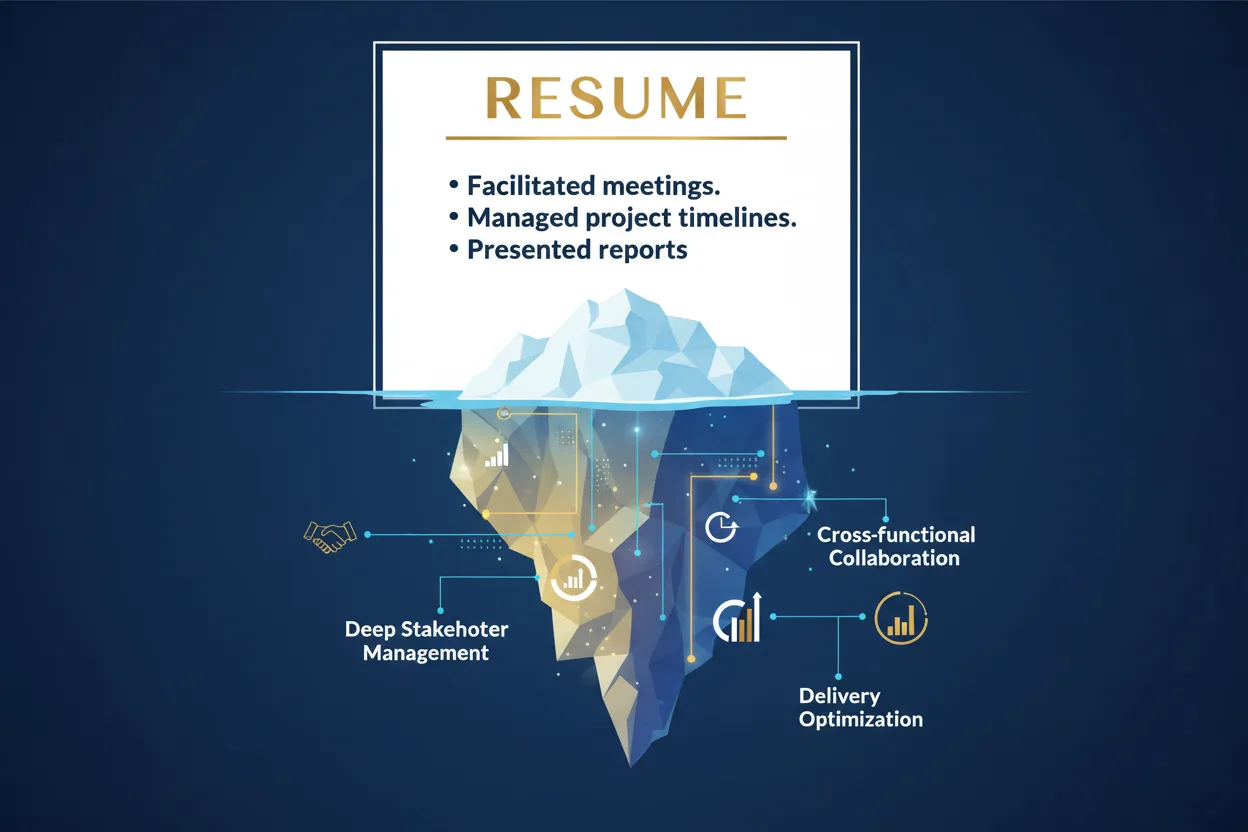
A frequent BA resume issue is focusing too much on documentation mechanics and too little on decision impact. Writing “created BRD” or “maintained requirements” is not enough. Recruiters want to know what business decision those artifacts enabled.
Another common mistake is domain-neutral language. If the role is in finance, healthcare, logistics, or SaaS, add context that shows you understand workflows and compliance constraints in that environment.
- Generic skill section with no support in experience bullets.
- No quantified process improvements or KPI movement.
- Overly technical wording for business-facing BA roles.
- No sign of stakeholder facilitation experience.
- Outdated tools listed without current relevance.
How to Optimize Your Resume for ATS
ATS filters for BA roles usually rely on requirements and process keywords. Use wording from the vacancy naturally in your summary and experience. Terms like requirements gathering, process mapping, gap analysis, user stories, KPI tracking, and stakeholder management are commonly matched.
Keep section names standard and layout simple. Avoid visual-heavy templates that hide text inside graphics. Include role-specific tools where relevant, but prioritize business outcomes in your bullets so your resume also resonates with human reviewers.
If you target multiple BA domains, create tailored versions. A generic “one size fits all” BA resume often underperforms compared to focused domain language.
Business Analyst Resume Summary Examples
Business Analyst with 5+ years of experience translating operational challenges into clear requirements and process improvements. Improved reporting accuracy and reduced approval cycle times through cross-team analysis initiatives.
Data-driven Business Analyst skilled in process mapping, SQL-supported analysis, and stakeholder facilitation. Delivered requirement clarity across multiple system enhancements that improved delivery predictability.
Business Analyst focused on customer-facing and internal workflow optimization. Known for building practical documentation, aligning teams early, and supporting high-confidence implementation decisions.
Related Career Resources
Use these resources to strengthen your BA positioning before applying.
FAQ
Highlight problem-solving outcomes: process improvements, requirement clarity, reporting improvements, and measurable business value.
Yes. Include relevant tools like SQL, Excel, BI dashboards, and requirements documentation platforms when used in your daily work.
Use project examples with clear scope, stakeholders, methods used, and outcomes. Even internship or academic projects can be valuable when written with impact.
Frequent keywords include requirements gathering, process mapping, stakeholder management, business cases, gap analysis, KPI tracking, and user stories.
Yes. Finance, operations, product, and IT analysis roles use different terminology and priorities, so tailored wording improves response rates.